


PUBLISHED ON March 13, 2026
Gia Chester '27
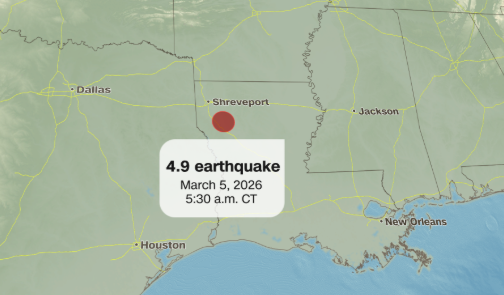
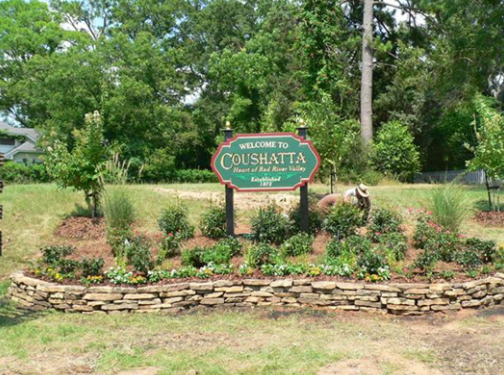
During the early dawn of March 9th, 2026, four earthquakes occurred from 4:33 to 4:41 in the morning near the towns of Coushatta, Edgefield, and Carroll, located in northwestern Louisiana. The earthquakes ranged from a magnitude of 3.1 to 4.0 on a scale of 10, meaning the earthquakes were minor in power, although Louisiana usually experiences earthquakes much less frequently and at an even lower magnitude than this. Those in the area affected reported shaking and vibrating in their houses. No casualties or injuries have been reported. Just four days before those four earthquakes, a 4.9 magnitude earthquake at a depth of around 3 miles shook Red River Parish in the same area. This was the second biggest earthquake ever recorded in the state and the first largest land earthquake. The state’s largest earthquake occurred in Grand Isle in February 2006 at a magnitude of 5.3, although this was offshore. The more recent March 9th earthquakes are the third largest recorded in the state.
The earthquakes are thought to be caused by growth faults, which according to the Energy Glossary is “a type of normal fault that develops and continues to move during sedimentation and typically has thicker strata on the downthrown, hanging wall side of the fault than in the footwall.” This type of fault is common in the Gulf Coast due to the constant moving of sand and dirt on account of the perpetual deteriorating activity of the Mississippi River and Gulf of Mexico. Rather than the movement of tectonic plates, as typical in other states and countries with higher seismic activity (more frequent and powerful earthquakes), the earthquakes in this area are caused by degradation of sediment over a long period of time. According to a map from Data Basin, a mapping and analysis platform, these growth faults mostly really occur in northern Louisiana, from around Baton Rouge to the Red River Parish area that was recently affected.
Tulane Geosciences Professor Cynthia Ebinger adds, “It's possible that the increase is related to 10 to 15 years of increased volumes of wastewater injection, and it's something that the state will look at. We're seeing it build up so quickly; it's probably accelerated.” Essentially, as the oil and gas industry in Louisiana grows rapidly and the use of fracking and other invasive harvesting methods increases, it is a possibility that the frequency of these earthquakes will as well. Paired with the degradation of sediment in the area, this could make earthquakes in Louisiana much more frequent in upcoming years. Similar earthquakes have occurred within east Texas within the past few years, which is also a center of the American oil and gas industry and is very near to where the recent earthquakes in Louisiana just happened.
Since it is thought that the March 9th earthquakes were aftershocks of the earlier, larger, earthquake, hopefully that is the end of the seismic activity for now and the community is able to get back to normal soon.


Recommended Posts